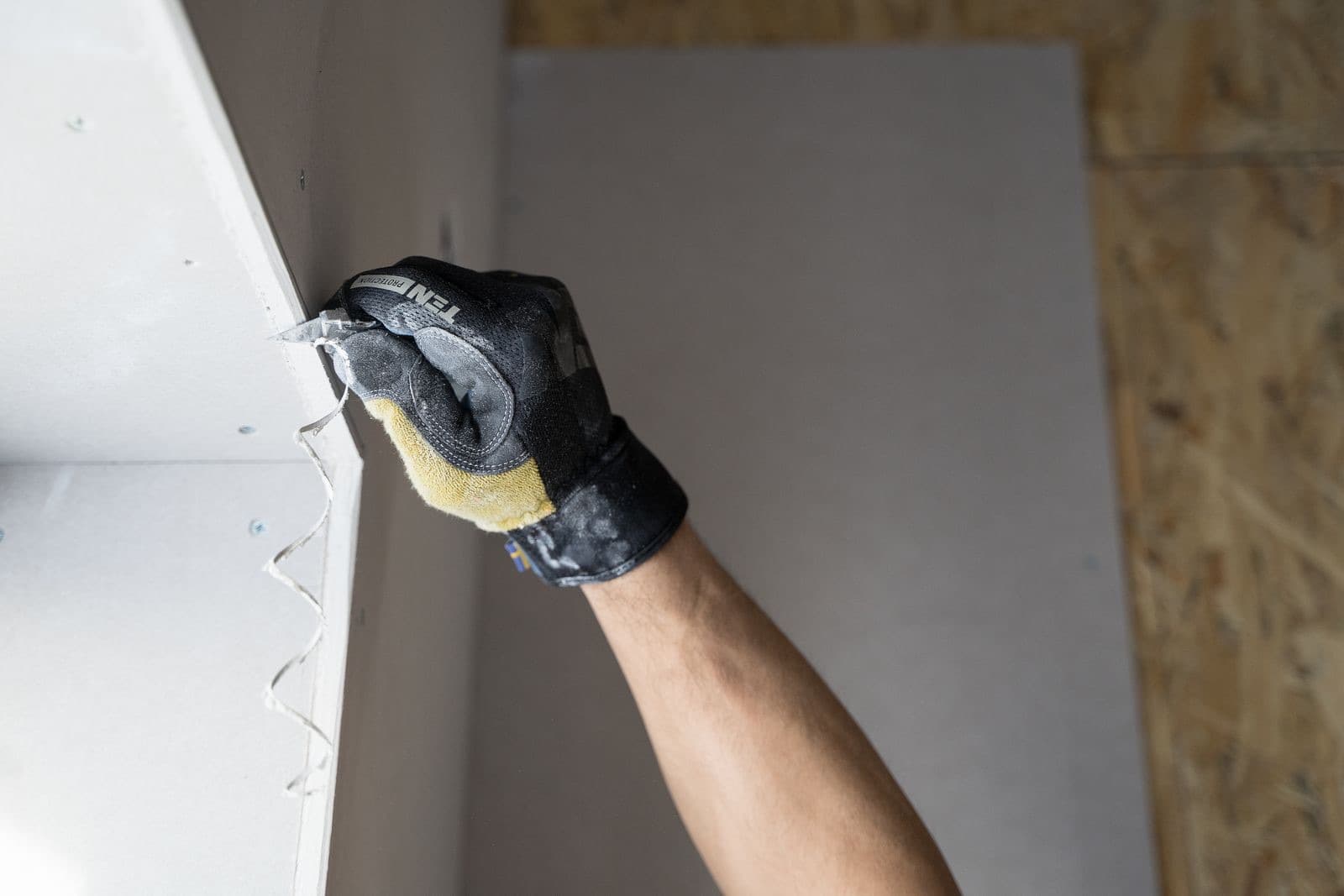
A repair can become a different job once the surrounding material is opened up. The visible problem may have looked small, but the contractor can now see something that was hidden during the first visit. The next decision is not simply whether to spend more. It is whether the new finding changes the repair you agreed, what options remain and what needs a decision before work continues.
PRG Property Services provides general repairs, decorating and plaster repairs, plumbing and carpentry in Sevenoaks. For a homeowner or property manager arranging that work, a clear response to an unexpected finding helps keep the original task and any additional work understandable. This guide is about that decision after work has begun, rather than drawing up a general maintenance list.
Separate the original repair from the new finding
Start with the agreed task. Perhaps it was a local repair to a damaged wall or work on a cupboard. Ask the contractor to explain what has now been found, where it is and how it affects that task. A photograph with the location marked can be more useful than a long description containing unfamiliar building terms.
Keep three things separate: what is visible, what the contractor believes it means and anything that still needs investigation. Those are different levels of certainty. For example, finding damaged material behind a finish does not by itself explain how the damage began. Ask what further assessment, if any, is needed before choosing a permanent repair.
Do not remove more material yourself to help diagnose the issue. The contractor should decide what can be inspected safely and whether another trade or specialist needs to be involved. Your part is to understand the finding well enough to make the next decision.
Ask what changes if you keep the original scope
A useful explanation connects the discovery to the proposed result. Can the original repair still be completed properly? Would continuing cover something that needs attention? Or is the additional work an optional improvement that could be carried out separately?
These questions help distinguish a necessary change from an opportunity to do more while the area is accessible. Both may be reasonable, but they should not be bundled into a single unexplained recommendation. Ask the contractor to identify which parts of the original work can still proceed and which depend on a decision about the new finding.
If there is an immediate safety concern, follow the relevant professional advice about using the affected area. That is a separate matter from agreeing the full scope and cost of a permanent repair. Do not assume a temporary measure means the underlying problem has been resolved.
Compare complete options rather than one extra price
Where more than one approach is possible, ask for each option to describe the work and the finish it leaves behind. A local repair and a wider replacement may have different implications for surrounding surfaces, access and later decoration. Knowing only the additional price makes those differences easy to miss.
A short written comparison can record:
- The new work included in each option.
- Any further investigation required before the price can be settled.
- Which original tasks remain included.
- The making-good and decoration included afterwards.
- Materials or finishes that may differ from what is already there.
- The effect on access, completion and other booked work.
Ask whether the figure is a firm price for a defined task or an estimate based on what can currently be seen. If some detail remains unknown, record the point at which it will be reviewed. That is more useful than treating an uncertain figure as a settled total.
Make one person responsible for the decision
In an occupied home, the person meeting the contractor may not be the person paying for the repair. In a managed property, the owner, agent and occupier may all need different information. Agree who can approve additional work and how the decision will reach the contractor.
A message passed through several people can lose the boundary between “please investigate” and “please carry out this extra work”. State the chosen option plainly, with the agreed price basis and any remaining condition. Keep it with the original scope so there is one understandable record of the change.
If you need time to decide, ask what can continue in the meantime and how the affected area will be left. A pause may affect another trade, a delivery or access to the room. Knowing that consequence helps you make a considered decision without mistaking every delay for an emergency.
Check the changed result at handover
At the end, refer to both the original work and the agreed addition. Look at the repair, the surrounding making-good and anything intentionally left for a later visit or another contractor. If decoration is separate, identify exactly which surfaces remain unfinished.
For wall work, the guide to preparing a repaired wall for decoration explains why the condition beneath a finish matters. The useful habit across general repairs is the same: make the newly discovered problem, the chosen response and the final finish clear before treating the job as complete.
Questions when the job changes
Does discovering extra work mean I must approve it immediately?
Ask what is urgent, what can wait and what the consequences of waiting are. Necessary safety measures and the scope of a permanent repair are different decisions. Where you need time, agree how the affected area will be left and what work can continue.
What should an approval for additional work contain?
Record the specific extra work, the price or estimate basis, the finish included and any effect on the original plan. If a further finding could change that agreement, identify when the contractor should return for another decision.